








Wall-Mounted Basin Taps


Built-In Basin Mixer


Origin Classic Basin Mixer


Flow Round Built-in Basin Mixer


Wall-Mounted Basin Taps
Wall-Mounted Basin Taps create a clean focal point around your basin while freeing up valuable surface space. By moving the controls and spout to the wall, you gain a streamlined layout that feels considered and practical in everyday use. At VitrA, each solution is engineered for UK plumbing standards and designed to work confidently with contemporary and classic bathroom schemes alike.
You will find that choosing the right wall mounted basin tap uk option involves more than appearance. Projection, installation depth, water pressure and basin compatibility all matter. This guide walks you through the technical details, finish choices and configuration options available within the VitrA Wall-Mounted Basin Taps collection, so you can select with clarity and avoid costly adjustments later.
Wall-Mounted Basin Taps: Features, Finishes And Design Options
Unlike deck-mounted taps fixed directly to the basin or worktop, Wall-Mounted Basin Taps house the valve body and pipework within the wall cavity. Only the spout and controls remain visible. This concealed basin tap structure reduces visual clutter around the basin edge and simplifies day-to-day cleaning.
When you explore a wall mounted tap, you will notice that the in-wall valve body connects to hot and cold feeds during first fix plumbing. After tiling, the trim set, handles and spout are installed. This two-stage process ensures precise alignment with your finished wall surface.
What Defines Wall-Mounted Basin Taps?
- Concealed valve system – The brass valve body sits inside the wall, similar in principle to concealed shower systems. This protects core components and leaves a refined external appearance.
- Visible spout and controls only – You see a minimal spout projection and either a single lever or dual handles. This approach suits modern wall mounted bathroom tap layouts and hotel-inspired bathrooms.
- Durable brass construction – VitrA wall mounted basin taps are manufactured with solid brass bodies for structural strength and corrosion resistance in UK water conditions.
- Ceramic disc cartridge technology – High-quality ceramic cartridges support smooth operation and help reduce drip risk over time.
- WRAS-compliant components – Designed to align with UK water regulations, giving installers confidence during specification and fitting.
Finish Options For UK Bathrooms
Finish choice influences maintenance, light reflection and the overall tone of the room. Within the VitrA Wall-Mounted Basin Taps range, you can select from finishes commonly preferred in the UK market:
- Chrome wall tap for bathroom sink – Highly reflective and easy to pair with chrome towel rails or shower frames. Chrome suits hard water areas when cleaned regularly with a soft cloth.
- Matt black – A muted surface that contrasts well with white ceramic or concrete-effect tiles. It works particularly well in minimalist or monochrome interiors.
- Brushed brass basin tap – A warmer metallic tone with a subtle brushed texture that diffuses fingerprints. This finish pairs well with natural stone and neutral porcelain tiles.
If you are comparing brass wall mounted tap finish options, consider lighting levels, tile colour and other metal accents in the room. Consistency across basin, bath and shower fittings usually creates a more resolved look.
Practical Details To Check Before Ordering
Projection and handle style directly affect comfort during use. Always review technical drawings before you buy wall mounted basin tap uk models.
- Spout projection – Measured from finished wall to water outlet. Typical projections range from approximately 160mm to 220mm. A deeper bowl often requires longer reach.
- Spout height and aerator angle – The angle determines how water falls into the basin. A well-positioned outlet reduces splashback.
- Handle configuration – Slimline levers offer intuitive temperature control, while crosshead or dual control options provide a more traditional character.
- Plumbing depth for concealed mixer – Confirm the minimum cavity depth required for the valve body before closing the wall.
VitrA Wall-Mounted Basin Taps are developed with consistent engineering tolerances, helping installers achieve accurate alignment with tiled surfaces.
Compatibility With Basin Types And Bathroom Layouts
Correct pairing between tap and basin prevents splashing and awkward hand positioning. A wall tap for countertop basin installation differs from a wall mounted tap with vanity basin setup. Basin depth, rim thickness and waste position all influence the final result.
When reviewing bowl basins, you will see that countertop designs often sit higher than inset models. This affects tap height above basin uk measurements. Installers typically measure from the finished wall surface to the centre of the waste, then align the spout so water lands close to that central point.
Key Compatibility Considerations
- Wall mounted tap with bowl basins – Countertop bowls usually require longer spout projection for basin alignment. A projection around 200mm may suit deeper vessels.
- Inset basins – These sit partially within the worktop. A medium projection often works well, provided the flow reaches the centre of the bowl.
- Undercounter designs – As the rim sits below the worktop, careful calculation of tap height above basin uk standards is essential to avoid excessive drop distance.
- Wall mounted tap with vanity basin – Vanity units may include drawers. Ensure pipework positioning does not conflict with storage compartments.
Measuring Like A Professional Fitter
- Measure from the finished floor to the top rim of the basin.
- Identify the centre of the waste outlet.
- Determine the ideal spout projection for basin depth so water flows towards the centre rather than the front edge.
- Confirm tile thickness before finalising concealed tap valve installation.
VitrA coordinates many basin and tap proportions within its collections, which simplifies specification. When basin and Wall-Mounted Basin Taps are designed to complement each other, visual balance improves and installation becomes more straightforward.
Installation Requirements And Plumbing Considerations
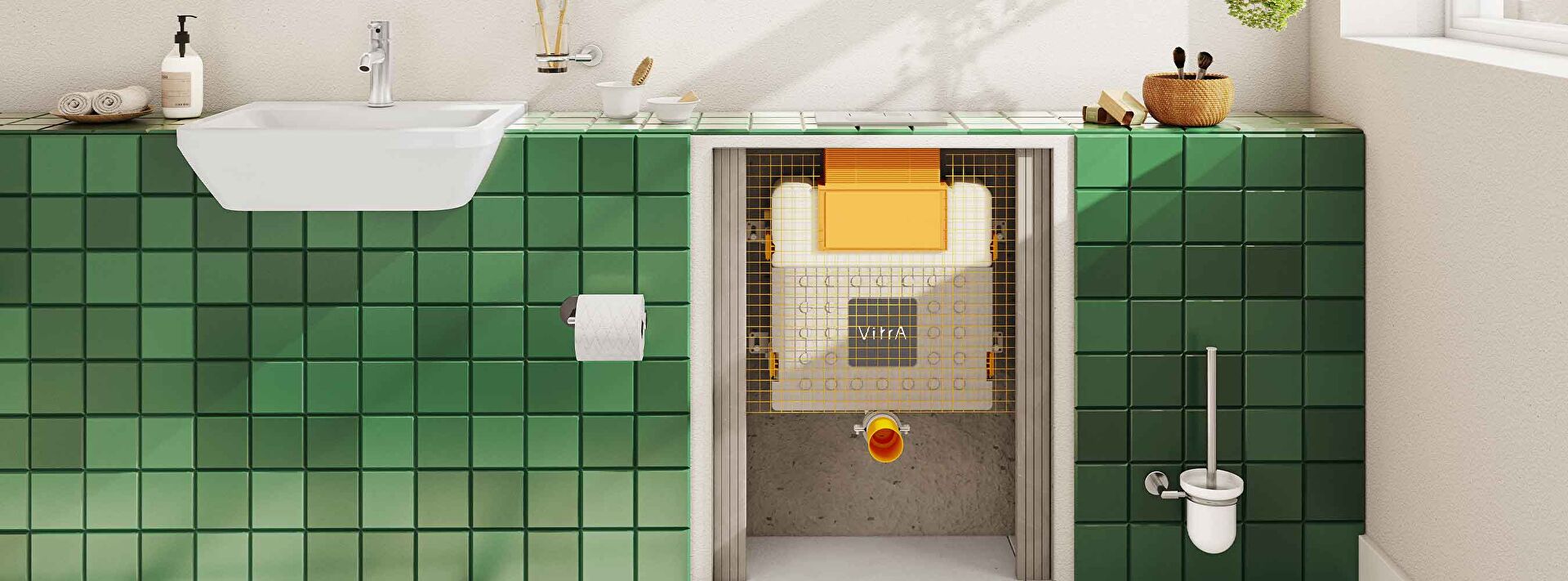
Installing wall mounted basin taps requires early planning. The first fix plumbing stage must allow enough cavity depth to house the concealed valve body. This preparation is comparable to fitting a concealed cistern system, where internal components are positioned before tiling.
Wall Type And Structural Preparation
- Solid masonry walls – These may require chasing out to create sufficient depth for the valve body. Always confirm structural integrity before cutting.
- Stud partition walls – Install noggins or support brackets between studs to secure the concealed mixer. This ensures stability during long-term use.
- Minimum cavity depth – Check product specifications for plumbing depth for concealed mixer requirements. Allow tolerance for plasterboard and tile thickness.
Water Pressure And Feed Positioning
Most VitrA Wall-Mounted Basin Taps operate effectively within typical UK domestic pressures. Always review the minimum and maximum bar requirement stated in the technical documentation. Balanced hot and cold pressure improves temperature stability, particularly with single lever wall mounted basin tap designs.
If you run a gravity-fed system, confirm compatibility in advance. Some households may benefit from a pump to maintain consistent flow. Position hot and cold feeds accurately at first fix stage to avoid misalignment after tiling.
Access And Long-Term Servicing
Although concealed, the trim set allows access to serviceable components. VitrA concealed bodies are engineered for durability and designed to support cartridge replacement without extensive wall disruption. Ceramic disc technology reduces wear and supports smooth lever movement over years of daily use.
Planning at renovation stage rather than as a simple tap swap usually leads to a better result. Replacing a deck-mounted tap with a wall-mounted model often involves opening the wall and potentially changing the basin if tap holes are no longer required.
Single Lever And Three Hole Wall-Mounted Basin Tap Options
Configuration choice shapes your daily experience at the basin. VitrA Wall-Mounted Basin Taps are available in both minimalist wall basin mixer formats and three hole basin mixer wall mounted arrangements.
Single Lever Wall Mounted Basin Tap
A single lever design combines temperature and flow control in one handle. You adjust with one hand, which proves practical in family bathrooms and en-suites. This layout supports precise temperature blending when hot and cold pressures are balanced.
Advantages include:
- Quick temperature adjustment – Ideal for busy mornings.
- Streamlined appearance – A compact control plate works well in contemporary bathroom tap design schemes.
- Reduced surface elements – Fewer components on the wall simplify cleaning.
Three Hole Basin Mixer Wall Mounted
This format features a central spout with separate hot and cold separate controls. It often suits hotel-inspired or heritage-influenced bathrooms.
Key characteristics include:
- Dual control wall tap configuration – Independent handles allow fine adjustment of each water feed.
- Visual symmetry – Even spacing between handles and spout creates a balanced layout.
- Handle variety – Choose from lever, crosshead or slimline paddle styles depending on user preference.
If you are considering a three hole basin mixer, check handle reach and spacing carefully. Ensure the wall structure accommodates three fixing points and concealed connections.
VitrA offers coordinated collections across taps and showers. This allows you to align your designer basin taps with bath fillers and shower mixers in the same finish, achieving continuity across the room.
Coordinating With Bathroom Taps And Accessories
When selecting Wall-Mounted Basin Taps, think beyond the basin area. A consistent tap scheme across the bathroom strengthens visual clarity and simplifies maintenance.
Matching bathroom taps across basin, bath and shower fittings ensures similar flow characteristics and cartridge types. This supports consistent performance and servicing over time. A coordinated tap collection also reduces uncertainty during specification.
If you prefer contrast, use it intentionally. For example, brushed brass bathroom fittings can stand out against neutral porcelain tiles, while a chrome tap and accessory set integrates seamlessly with chrome shower frames and towel rails.
Explore a complete bathroom tap range before finalising your order. Aligning finishes across accessories such as robe hooks, towel bars and flush plates can elevate the overall impression without complicating installation.
Maintenance, Cleaning And Long-Term Performance
Maintaining Wall-Mounted Basin Taps is straightforward when you follow a consistent cleaning routine. Wipe external surfaces regularly with a soft, damp cloth and avoid abrasive cleaners that may damage the finish. Drying the tap after use can help minimise limescale marks, particularly in hard water areas.
For long-term reliability, it is important to use genuine mixer tap spare parts when replacing cartridges, aerators or seals. Components designed specifically for your tap model help preserve smooth operation and consistent flow.
Periodic inspection of seals and aerators can prevent minor drips from developing into larger issues. Thanks to durable brass construction and ceramic disc technology, VitrA Wall-Mounted Basin Taps are built to deliver dependable daily performance in busy UK households.
Frequently Asked Questions About Wall-Mounted Basin Taps
Are wall-mounted basin taps suitable for all bathroom sinks?
They work with most basin types, but the spout projection and installation height must match the bowl depth and waste position. Shallow basins need shorter projection to limit splashing, while deeper countertop bowls usually require longer reach. Always measure from the finished wall surface and review technical drawings before installation.
Do I need high water pressure for a wall-mounted basin mixer?
Most modern basin mixers are designed for typical UK domestic pressures. Check the minimum bar requirement in the specification. If you use a gravity-fed system, confirm compatibility or consider a pump. Balanced hot and cold pressure improves temperature control.
Can you replace a deck-mounted tap with a wall-mounted model?
Yes, although it usually involves opening the wall to install concealed pipework and a suitable valve body. This approach works best during a full renovation. You may also need to change the basin if existing tap holes will no longer be used.
How high should a wall-mounted basin tap be fitted?
Fitters typically position the spout so water lands near the centre of the basin, often around 100–150mm above the rim depending on basin depth. The exact height depends on spout projection and basin style. Always confirm measurements using both basin and tap technical drawings.


