







Frames & Flush Plates


Installation set for electrical connection


V-Fix Prime Slim Back-to-Back Wall-Hung Frame for Wall-Hung Toilet – 112cm
V-Fix Prime Slim Back-to-Back Wall-Hung Frame for Wall-Hung Toilet – 112cm


V-Fix Prime Regular Wall-Hung Frame for Wall-Hung Toilet – 112cm


Concealed Cistern for Back-to-Wall Toilet – 73cm–83cm
Concealed Cistern for Back-to-Wall Toilet – 73cm–83cm


V-Fix Prime Slim Wall-Hung Frame for Wall-Hung Toilet – 112cm
V-Fix Prime Slim Wall-Hung Frame for Wall-Hung Toilet – 112cm


V-Fix Prime Slim Wall-Hung Frame for Wall-Hung Toilet – 112cm

V-Fix Prime Slim Wall-Hung Frame for Wall-Hung Toilet – 112cm


V-Fix Prime Regular Back-to-Back Wall-Hung Frame for Wall-Hung Toilet – 112cm


Vitrus Glass Concealed Cistern


Vitrus Glass Concealed Cistern

Frames & Flush Plates
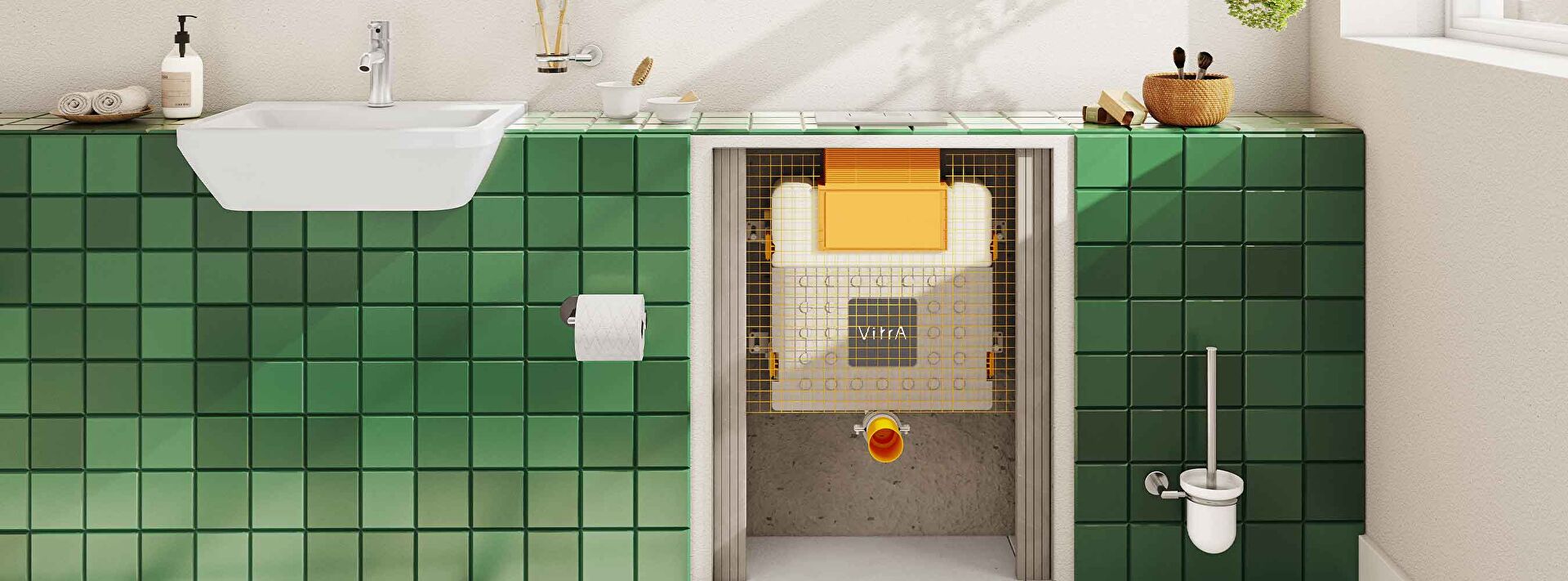
Behind a clean bathroom wall sits a system that carries weight, manages water and responds instantly when you press a button. Frames & Flush Plates are the visible and invisible parts of that system. The frame secures the WC pan and concealed cistern inside the wall, while the flush plate is the control surface you use every day.
When you choose the right Frames & Flush Plates, you protect your installation, get reliable flush control and create a finish that feels considered. In UK homes, where wall hung and back to wall toilets are increasingly popular, a reliable concealed cistern frame and a well-matched flush plate UK solution make a real difference. VitrA designs these components to work together, so you can install with confidence and use them for years without concern.
Choose The Right Frames & Flush Plates For Concealed Toilet Installations
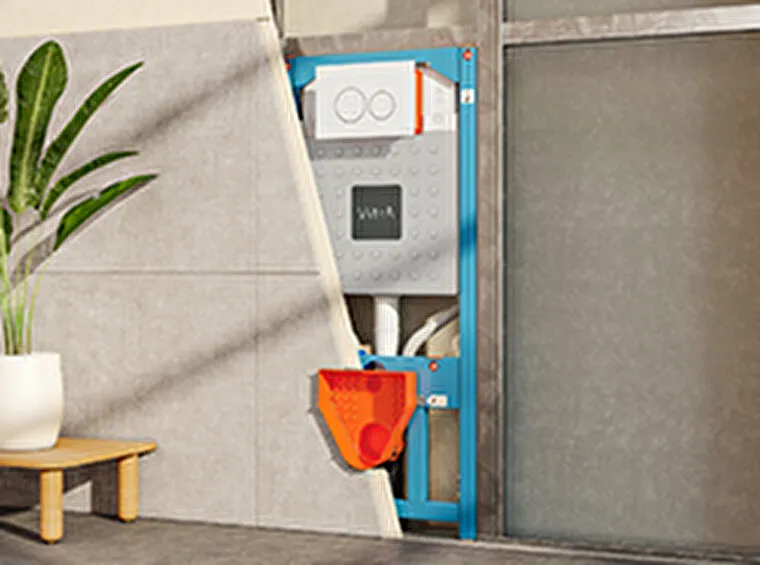
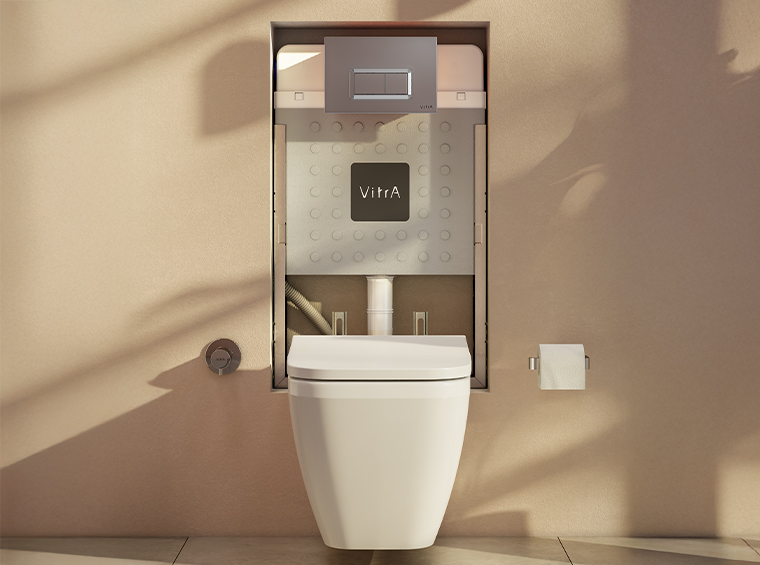
In a typical UK bathroom with a wall mounted toilet flush system, the structural work happens out of sight. A concealed cistern frame is fixed securely to the floor and wall structure. It carries the WC pan, supports user weight and houses the cistern. The flush plate is the only visible element, acting as the access point and the control interface.
To understand Frames & Flush Plates clearly, it helps to break them down:
- Concealed cistern frame – A steel support frame, often powder-coated for corrosion resistance, designed to carry significant loads. Many wall hung toilet frame systems support up to 400 kg when correctly installed.
- Integrated cistern – Typically set for dual flush 3/6 litre in UK installations, aligning with UK flush volume requirements and WRAS-focused design standards.
- Flush plate or toilet flush plate – The front control panel, available as a dual flush plate with two buttons for reduced and full flush.
- Service access opening – The plate opening doubles as maintenance access, so internal components can be reached without removing tiles.
Mechanical and pneumatic operation are often discussed during specification. Mechanical flush plates use direct push rods or cable systems. Pneumatic versions rely on air pressure tubes to trigger the valve. In most UK residential projects, a mechanical flush plate remains popular due to straightforward installation and dependable performance.
Flush control matters. A dual flush plate typically offers a 3 litre reduced flush and a 6 litre full flush. Over time, this gives you control over every flush in family homes and light commercial spaces. When Frames & Flush Plates are specified correctly, you achieve consistent flushing, quiet refill and easy servicing from the front.
For compatible systems, explore the concealed cistern options designed to work with these plates and frames.
Frame Types For Wall Hung And Back To Wall Toilets
Not all toilet frame systems are the same. The difference between a wall hung toilet frame and a back to wall toilet frame affects installation depth, fixing method and load distribution. Understanding this early avoids costly adjustments later.
Wall hung systems require a robust WC support frame. This frame bolts to the floor and secures into solid masonry or reinforced stud walls. It carries the entire weight of the pan and user. Many steel toilet frame UK solutions include height adjustable toilet frame legs, allowing you to fine-tune pan height to suit finished floor levels.
Back to wall configurations can be simpler structurally. The pan sits on the floor, while the concealed cistern may be housed within a duct wall or furniture unit. In this case, the frame may focus more on supporting the cistern than carrying user weight.
Key differences to consider:
- Wall hung toilet frame – Designed for in wall toilet frame installation, fixed to floor and wall studs. Often adjustable in height by several centimetres to match tile build-up.
- Back to wall toilet frame – Supports the cistern behind a stud or furniture unit, with the pan weight transferred to the floor.
- Installation depth – Slimline frames suit tighter UK bathrooms. Always check cavity depth before ordering.
- Maintenance access – Service is carried out through the flush plate opening, so alignment is critical.
VitrA frame systems use corrosion-resistant metal structures and engineered brackets. The steel frames are tested for stability and long-term load performance in residential and light commercial settings. Quiet fill valves reduce noise during refill, which is important in en-suite bathrooms. With VitrA Frames & Flush Plates, installers benefit from clear fixing points and predictable alignment, while homeowners gain long-term reliability.
If you are pairing with a pan, see the range of wall hung toilet models suitable for in-wall frames.
Flush Plate Styles, Finishes And Materials
The flush plate is the only visible part of a concealed WC system. Its finish, texture and button feel shape the overall impression of your bathroom. Many homeowners searching for a flush plate UK solution focus first on colour and surface.
In the UK market, the most requested flush plate finishes include:
- Chrome flush plate – Highly reflective, easy to coordinate with chrome taps and towel rails. Popular in contemporary and transitional bathrooms.
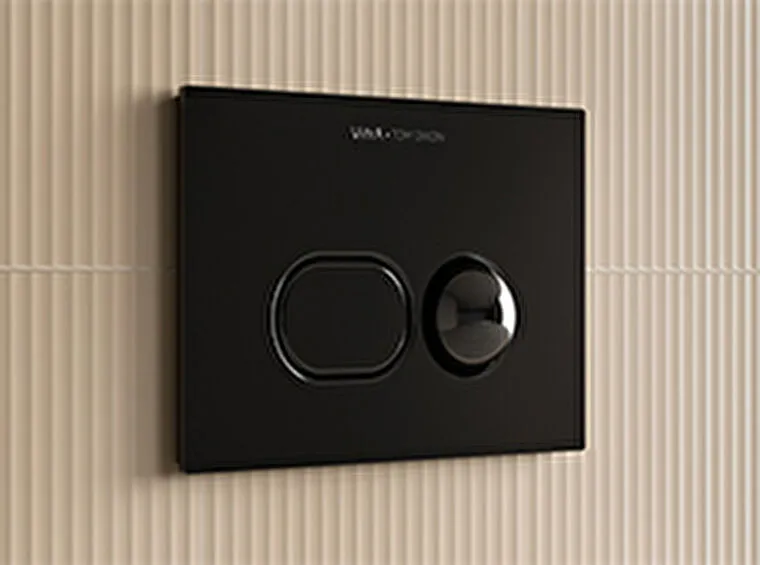
- Black flush plate – Often matt black, creating contrast against light tiles and pairing well with black brassware.
- Brushed brass flush plate – Warm metallic tone, frequently matched with brushed brass accessories for a cohesive scheme.
- Brushed nickel and stainless steel tones – Subtle sheen, resistant to fingerprints in busy family spaces.
- Glass flush plate – Smooth front surface, sometimes with a coloured or tinted backing for a sleek look.
Material choice also affects durability. ABS plastic plates are lightweight and cost-effective. Metal-faced options or glass-fronted designs offer increased scratch resistance and a more solid feel. In high-traffic bathrooms, a durable surface treatment helps maintain appearance over time.
Design details vary:
- Round flush button layouts create a softer visual line.
- Square flush plate design suits angular sanitaryware and rectified tiles.
- Slimline rectangular plates sit close to the wall for a minimalist finish.
VitrA flush plates are engineered with durable button mechanisms tested for repeated daily use. The tactile response feels positive, reducing the risk of partial flush activation. When you coordinate your plate with bathroom accessories in similar finishes, the room feels intentional rather than pieced together.
By selecting VitrA Frames & Flush Plates in finishes that reflect your brassware and accessories, you ensure that the only visible part of the system enhances the space rather than distracting from it.
Mechanical Flush Plate Options
A mechanical flush plate remains a dependable choice for many UK installations. It operates through direct push rods or cable systems that physically engage the cistern valve. When you press the button, the movement transfers immediately to the flush mechanism.
This approach offers several advantages:
- Push button flush plate simplicity – Fewer components compared to complex systems, which often means easier servicing.
- Dual flush mechanical plate capability – Most models provide 3/6 litre options, meeting UK flush volume requirements.
- Reliable flush mechanism UK installers trust – Consistent actuation force reduces sticking or incomplete flush cycles.
- Straightforward installation – Clear alignment with the mounting frame and cistern aperture.
Mechanical toilet flush button systems suit residential bathrooms and light commercial settings such as offices or hospitality projects. Installers appreciate the predictable installation process. Homeowners value the solid button feedback and dependable operation.
VitrA mechanical options are engineered for long service life. Internal components are designed to withstand repeated daily use. When paired with compatible VitrA Frames & Flush Plates and concealed cistern frames, the result is a coordinated system that reduces the likelihood of mismatched parts or ordering errors.
For dedicated robust push-button systems, explore the mechanical flush plate category.
Flush Plate Frames And Mounting Components
A flush plate does not sit directly into plasterboard or tile without support. It requires a compatible flush button mounting frame or flush plate installation kit to secure it neatly within the wall opening. This mounting system aligns the plate with the inspection aperture of the concealed cistern frame.
Common installer questions often include whether a new designer toilet flush plate can retrofit onto an existing cistern. The answer depends on brand compatibility and actuation type. Fixing points, rod lengths and aperture sizes vary between manufacturers.
Important technical considerations include:
- Aperture dimensions – The wall opening must match the cistern’s specified inspection size.
- Depth tolerance – Tiles and adhesive add thickness, so adjustable mounting frames help achieve a flush finish.
- Clip-in versus screw-fixed designs – Clip-in systems allow quicker front access, while screw-fixed options may offer firmer seating.
- Concealed plate support frame alignment – Ensures that buttons sit square and operate smoothly.
VitrA matching frame and plate systems are designed to work together. This reduces guesswork on site and helps avoid issues such as uneven button travel or misalignment. Browse the full range of flush plate frames to find compatible mounting components.
Compatibility With Cisterns, Toilets And Bathroom Layouts
A well-planned wall mounted toilet flush system deserves components that work together without compromise. By reviewing the full range of VitrA Frames & Flush Plates, you can select a compatible concealed cistern frame, choose a finish that reflects your design direction and secure a dual flush plate that gives you reliable flush selection.
Check suitable toilets to ensure your pan and flush system are specified together. Explore the collection to find a configuration that fits your installation depth, preferred finish and performance expectations, and move forward knowing each element has been engineered to function as one system.
Frequently Asked Questions About Frames & Flush Plates
Are flush plates universal, or do I need a specific one for my cistern?
They are not universal. The plate must match the brand and model of concealed cistern because the fixing points and actuation method differ. Always check whether your system uses mechanical push rods or another mechanism, and confirm the model reference before ordering. Using a matched set avoids poor flushing performance or fitting issues.
Can I replace a flush plate without removing tiles?
In most cases, yes. The plate clips or screws into a mounting frame at the inspection opening of the cistern. As long as the new plate is compatible with the existing cistern and frame, it can usually be swapped from the front without disturbing tiles. Always isolate the water supply before carrying out any work.
What is the benefit of a dual flush plate?
A dual flush plate allows you to choose between a reduced flush and a full flush, typically around 3 and 6 litres in UK systems. This lets you match each flush to the load. It also supports compliance with modern flush volume requirements in new builds and renovations.
Do wall hung toilet frames support enough weight for everyday use?
Yes, when installed correctly to the manufacturer’s instructions. Steel support frames are designed to carry substantial loads and are fixed securely to the floor and wall structure. Proper installation is key, including correct anchoring and alignment, to ensure long-term stability and safe use.


