





Back to Wall Toilets


Valarte Back-to-wall WC - 56cm


S50 Back-to-Wall WC


Integra Back-to-Wall Toilet


Zentrum Floor-Standing WC


Integra Back-To-Wall Toilet - Comfort Height


S50 Back-to-Wall WC


Liquid Rim-ex Floor-Standing WC


M-Line Square Back-to-Wall Toilet


M-Line Round Back-to-Wall Toilet

Back To Wall Toilets
A well-planned bathroom feels calm, organised and easy to use every day. Back To Wall Toilets offer a practical way to achieve that clean look, with the cistern hidden from view and pipework neatly concealed. The pan sits flush against the wall, creating a streamlined finish that suits modern British homes. Whether you are renovating a family bathroom, upgrading a cloakroom or refining an en-suite, this style brings clarity to the layout without overcomplicating installation.
You gain a WC solution that looks considered, frees up visual space and supports straightforward cleaning around the base. In UK renovations where space, plumbing position and long-term reliability all matter, a floor standing toilet with concealed cistern often becomes a sensible choice. VitrA combines precision ceramic manufacturing with durable glazed finishes and carefully engineered flushing systems, giving you confidence that your bathroom wc pan contemporary design will perform as well as it looks.
Back To Wall Toilets: Features, Sizes And Installation Options
A back to wall toilet UK homeowners choose most often is a floor-mounted WC pan that sits directly against the wall. The cistern is hidden either inside the wall cavity or within a furniture unit. Unlike close-coupled toilets, there is no visible tank behind the pan. Unlike wall-hung models, the pan rests on the floor rather than being suspended from a frame.
This difference affects installation and appearance:
Floor-mounted support – The pan is fixed to the floor, which many installers and homeowners find reassuring during a UK bathroom renovation.
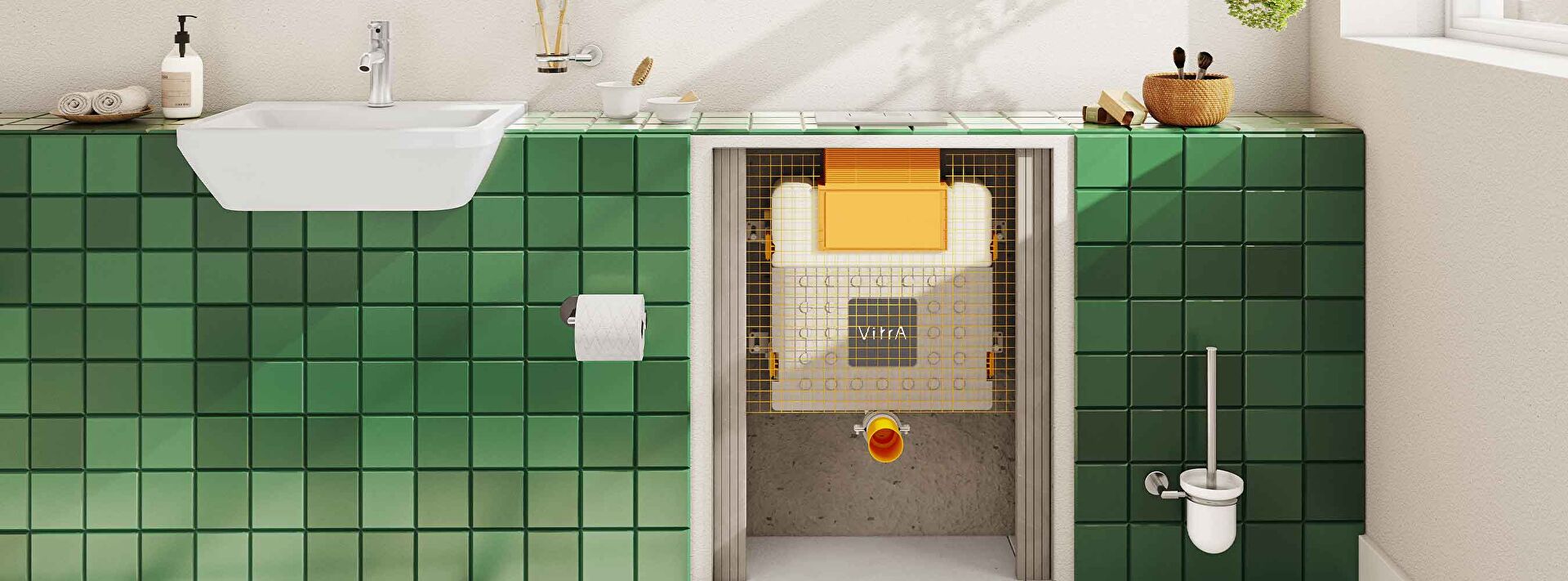
Concealed cistern compatibility – Designed to work with in-wall frames or furniture-mounted cisterns, keeping pipework out of sight.
Neat pipe routing – Suitable for horizontal or vertical waste outlets, depending on your existing soil pipe position.
Flush plate access – Maintenance is typically carried out through the flush plate opening, avoiding the need to remove tiles.
Projection depth is important in British homes where bathrooms can be compact. Standard projection often ranges from around 520 mm to 560 mm. Short projection models, sometimes closer to 480–500 mm, help you gain extra circulation space in smaller rooms. Typical pan height is around 400 mm, though seat height may vary slightly depending on design.
VitrA Back To Wall Toilets are produced in high-quality vitreous china with smooth glazed surfaces that resist staining and limescale build-up. In hard water areas across the UK, this makes day-to-day maintenance simpler. Many models include rimless technology, where the traditional internal rim is removed to allow water to flow evenly around the bowl. This improves hygiene and reduces hidden areas where residue can collect.
You can also explore matching cistern options such as a concealed cistern to complete the installation. Choosing compatible components from the same brand reduces uncertainty during fitting.
What Are Back To Wall Toilets?
In simple terms, this type of WC combines a floor standing pan with a hidden cistern. The pan touches the floor and the wall. The tank is concealed. This creates a cleaner silhouette than a close-coupled toilet, while avoiding the fully floating look of a wall hung model. For many households, this strikes the right balance between familiarity and contemporary styling.
Types Of Back To Wall Toilet And Design Variations
When selecting a back to wall toilet design, shape plays a major role in the overall feel of your bathroom. The profile of the pan, the seat thickness and the edge detailing all influence how the space reads.
Common design directions include:
Round pan back to wall toilet – Softer curves suit compact bathrooms and traditional interiors. These shapes often feel more forgiving in smaller rooms.
Square edge toilet pan – Defined lines and sharper corners align with contemporary bathroom toilet styles UK homeowners favour in new builds.
Short projection back to wall toilet – Designed specifically for cloakrooms and en-suites where every centimetre counts.
Rimless back to wall wc – Removes the inner rim, allowing a more direct and controlled water flow for improved bowl coverage.
Seat design also varies. Slim, minimalist seats create a refined profile. Slightly thicker seats can feel more substantial in family bathrooms. VitrA engineers its toilet seats to align precisely with the pan contours, avoiding movement and uneven gaps.
Many collections are coordinated across basins, furniture and WCs. This allows you to select a bathroom wc pan contemporary model that matches a basin from the same design family. The result feels cohesive rather than assembled from unrelated parts.
If you prefer a fully floating appearance with visible floor beneath the pan, you can compare with a wall hung toilet. Reviewing both options side by side helps you decide whether floor contact or a suspended look suits your layout better.
Rimless Technology And Hygiene Benefits
Rimless back to wall wc designs direct water around the bowl through carefully shaped channels. Without a traditional rim, there are fewer hidden cavities. Cleaning becomes more straightforward, and you reduce the risk of bacteria accumulating under edges. In busy households, this practical advantage often matters more than appearance alone.
Choosing The Right Concealed Cistern For A Back To Wall Toilet
The pan is only one part of the system. A concealed cistern for back to wall toilet installations determines flushing performance, flush control and long-term reliability. Selecting the correct cistern is essential in any UK project.
Most modern systems include a dual flush concealed cistern, commonly offering 6/3 litre options. This meets UK water regulations and gives you two flush volumes. The half flush handles liquid waste, while the full flush stays available when needed.
There are two primary installation routes:
Furniture-mounted cistern – Installed inside a WC unit, often used in fitted bathroom furniture runs. This suits projects where storage and concealed pipework are combined.
In-wall frame system – Built into a solid wall or stud partition. A toilet frame and cistern UK configuration provides structural support and a stable fixing point.
Access for maintenance is normally through the flush plate aperture. The plate can be removed to reach internal components such as the fill valve or flush valve. This avoids breaking tiles in most servicing scenarios.
For complete solutions, see back to wall toilet with concealed cistern. VitrA cistern systems are tested for durability, quiet refilling and long-term performance. In family bathrooms with frequent daily use, this reliability reduces the risk of unexpected disruption.
Flush Control And Long-Term Value
A well-matched dual flush system keeps performance consistent over time. Combined with durable internal components and robust frames, this creates a WC solution designed for consistent daily use. When planning UK bathroom renovation toilet options, it makes sense to view the pan and cistern as one integrated system.
Back To Wall Toilet Seats, Flush Plates And Finishing Touches
Small details influence daily comfort. A soft close toilet seat prevents slamming, protects the ceramic surface and reduces noise at night. In shared households, this simple feature makes a noticeable difference.
Quick release toilet seat mechanisms allow you to remove the seat for deeper cleaning. This helps maintain hygiene standards, particularly in busy family homes. When replacing a seat, correct alignment with the pan shape is essential. Not all seats fit every model.
VitrA designs seats specifically for its WC pans to ensure:
Accurate contour matching – The seat follows the exact curve or square edge of the pan.
Stable hinge fixing – Reduces lateral movement during use.
Durable materials – Typically high-quality duroplast, resistant to scratches and discolouration.
Flush plate design also contributes to the final look. Options often include chrome flush plate finishes, brushed metal effects and matte black flush plate styles to coordinate with taps and shower fittings. Matching finishes create a consistent visual language across the room.
You can also choose a compatible toilet seat to ensure the correct fit and soft-close function. Selecting coordinated components protects your investment and supports long-term performance.
Is A Back To Wall Toilet Right For Your Bathroom Layout?
Every renovation starts with practical questions. Where is the soil pipe located? How much projection can the room accommodate? Is the wall solid masonry or a stud partition? These factors influence whether this style works for you.
A compact back to wall toilet suits:
Small bathroom toilet ideas – Short projection models free up floor area, making narrow layouts easier to navigate.
Cloakroom toilet solution – Ideal in under-stairs spaces where depth is limited.
Modern bathroom layout UK projects – Clean lines and concealed plumbing align with contemporary interiors.
Compared with a wall-hung option, a floor standing toilet vs wall hung decision often comes down to structure and preference. A wall-hung pan requires a robust frame secured within the wall. A floor-mounted pan distributes weight directly to the floor, which some homeowners prefer in older properties.
If you prefer a more traditional setup, consider a close coupled toilet as an alternative configuration.
Before confirming your choice, check floor levels, waste outlet direction and access routes for installation. If you are fitting new furniture, confirm the internal dimensions will accommodate the selected concealed cistern. Planning these details early avoids delays later.
Cleaning, Hygiene And Long-Term Durability
Maintaining a clean and hygienic bathroom is a priority in every home. The smooth glazed surfaces used in VitrA ceramics help resist staining and make routine cleaning more efficient. Rimless designs further reduce hidden areas where dirt and bacteria can accumulate, supporting improved hygiene over time.
Durability is equally important. High-fired vitreous china, robust fixing systems and reliable internal cistern components all contribute to long service life. Choosing quality materials from the outset minimises the likelihood of chips, cracks or performance issues developing with regular use.
To explore additional styles, materials and configurations, you can browse the full range of toilets to compare materials and finishes. Reviewing the wider collection helps you assess which design best matches your expectations for comfort, appearance and longevity.
A bathroom renovation is a significant decision, and clarity at each step makes the experience smoother. By exploring VitrA Back To Wall Toilets, you can compare projections, shapes and compatible concealed systems in one place. Reviewing specifications, installation requirements and matching accessories helps you move forward with confidence. If you are planning a UK upgrade, consider how a carefully selected floor standing toilet with concealed cistern could refine your layout while supporting reliable everyday use.
Frequently Asked Questions About Back To Wall Toilets
Are back to wall toilets suitable for small bathrooms?
Yes, they are often a good option for small bathrooms and cloakrooms because the cistern is hidden inside the wall or a furniture unit. Short projection models reduce how far the pan extends into the room, freeing up floor space. With less visible pipework, the layout looks tidier and easier to clean. Always check the projection depth and soil pipe position before ordering.
How do you access the cistern for maintenance?
Access is normally through the flush plate opening. The plate can be removed to reach the internal components such as the fill valve and flush valve. This means you do not need to remove tiles or furniture for most servicing jobs. Choosing a quality concealed cistern reduces the likelihood of frequent maintenance.
What is the difference between a back to wall and a wall hung toilet?
A back to wall model sits on the floor and is supported by it, while a wall hung version is fixed to a frame inside the wall and does not touch the floor. The wall hung option creates a floating look and makes floor cleaning easier underneath. The floor-standing version can be simpler to install in some renovations and may feel more familiar to homeowners used to traditional WCs.
How is flush volume set on back to wall toilets?
Water use depends on the cistern rather than the pan itself. Most modern concealed cisterns offer dual flush options, commonly 6 and 3 litres, instead of the single volume used by older systems. The half flush handles liquid waste, while the full flush stays available when needed.


