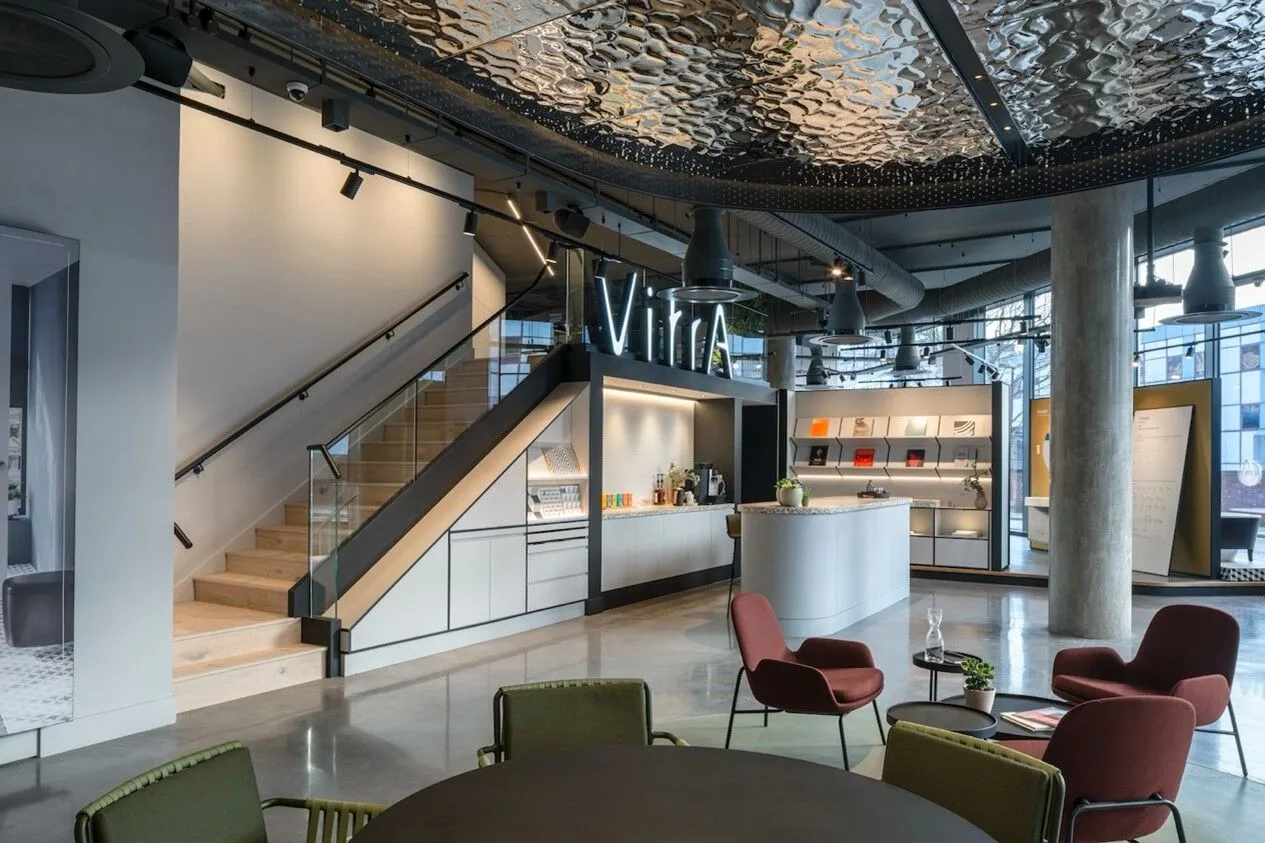

VitrA London, Turnmill Building, 64 Turnmill Street, London EC1M 5RR, from 16 – 20 September
Award-winning bathroom brand VitrA is proud to present the Minimal Matter project by emerging
designer Rameshwari Jonnalagedda at this year's London Design Festival. Displayed in VitrA’s Clerkenwell
showroom Rameshwari’s pioneering exhibition highlights the potential of minimal surfaces in offering
innovative and adaptable solutions in the built environment.
Rameshwari’s Minimal Matter project explores geometries that maximize structural efficiency with
minimal material use. By experimenting with minimal surfaces using 3D printing, Rameshwari aims to
explore how these forms can be used to meet diverse needs demanded by architecture. Minimal Matter
will feature a selection of 3D printed ceramic pieces in VitrA’s showroom, displaying prototypes of various
minimal surfaces geometries.
Minimal surfaces are distinguished by their high surface area-to-volume ratio and inherent cellularity.
Being both lightweight and strong enables the creation of structures that maximise material efficiency
while maintaining structural integrity. Minimal Matter explores how manipulating the porosity and cellular
structure of these surfaces can result in adaptable frameworks. These geometries can be tailored to meet
specific design needs, responding dynamically to various environmental and functional demands. Central
to the creation of minimal surface structures is additive manufacturing, or 3D printing, which allows for
the fabrication of intricate forms. Sustainable materials like stone white clay and red earthen terracotta
were chosen for their compatibility with 3D printing and ability to create the desired porous structures.
Minimal Matter showcases various prototypes of minimal surfaces, well-suited to a range of applications
from cooling elements like façade panels to enhancing bio-receptivity. Porous façade panels, for instance,
effectively manage heat, air, and light, leading to improved building performance, energy savings, and
increased comfort. These high-surface geometries also create fertile grounds for microhabitats, nurturing
small organisms and supporting plant growth. By integrating these designs into the built environment,
minimal surfaces have the potential to contribute to biophilic design, enhancing urban biodiversity and
embedding living ecosystems within our cities.
“Rameshwari Jonnalagedda's Minimal Matter project highlights the potential of minimal surfaces in
creating functional and sustainable designs across architecture, as well as sparking important
conversations around the future of building design and its role in addressing environmental concerns,”
comments Ruth Davies, Marketing Director of VitrA UK. “We at VitrA are proud to support Rameshwari’s
brilliant work in the field, as part of our ongoing efforts to initiate and platform conversations around
sustainable design, especially among young designers.”
For more information on VitrA’s sustainability efforts, click here.