







Concealed Cisterns for Back to Wall Toilets


Concealed Cistern for Back-to-Wall Toilet – 73cm–83cm
Concealed Cistern for Back-to-Wall Toilet – 73cm–83cm

Concealed Cisterns for Back to Wall Toilets
A well-designed bathroom often feels calmer, easier to maintain, and more considered. Concealed Cisterns for Back to Wall Toilets play a quiet but important role in achieving that result. By hiding the toilet tank behind the wall or inside furniture, you create a streamlined appearance while keeping everyday use practical and reliable. Only the flush plate remains visible, giving you control without visual clutter.
When you choose VitrA Concealed Cisterns for Back to Wall Toilets, you invest in an in wall cistern system engineered for UK homes. These systems are pressure tested, WRAS compliant, and developed to work seamlessly with VitrA WC pans. The result is a hidden toilet tank UK homeowners trust for durability, flush control, and straightforward servicing.
What Is A Concealed Cistern For A Back To Wall Toilet And How Does It Work?
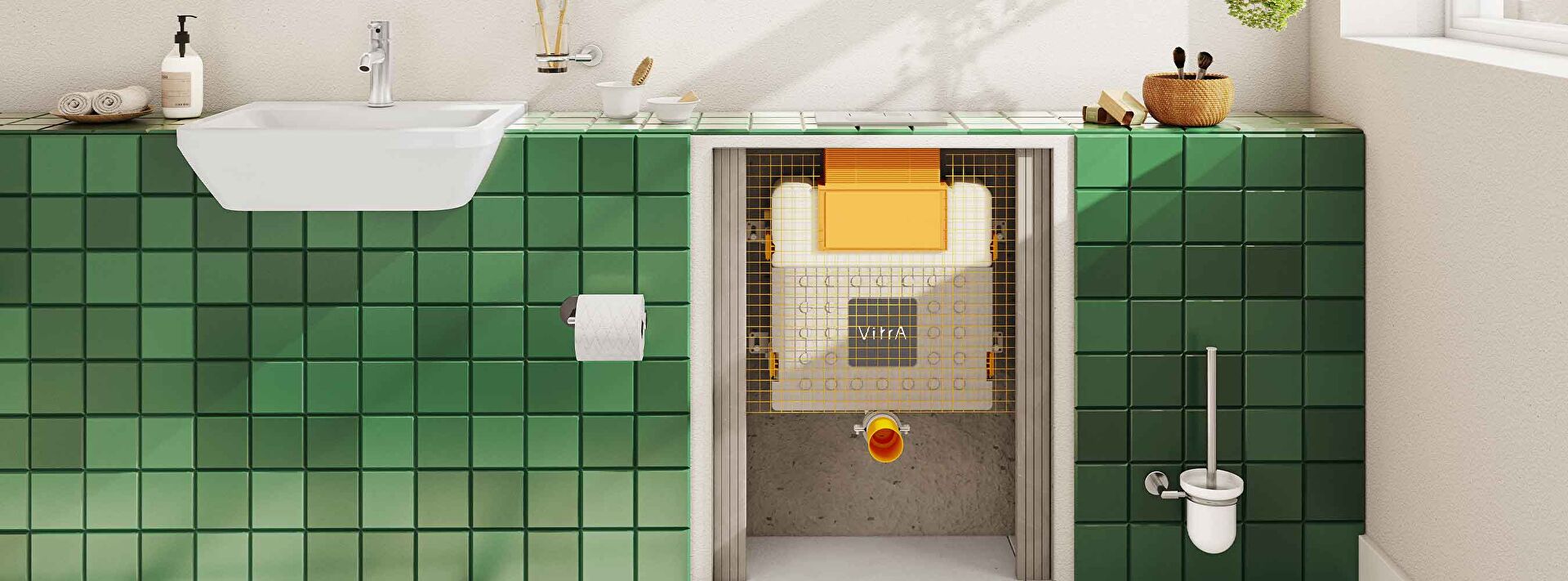
In simple terms, a concealed cistern is a toilet tank hidden behind a wall, within a WC unit, or inside fitted bathroom furniture. With Concealed Cisterns for Back to Wall Toilets, the pan sits flush against the wall while the cistern is mounted inside a frame or furniture housing. From the outside, you only see the flush plate. Everything else stays discreetly out of sight.
Inside the in wall cistern system, several components work together:
- Flush valve – Releases either a full or reduced volume of water into the pan. In the UK, a dual flush concealed cistern typically offers 6 litres for a full flush and 3 litres for a reduced flush.
- Fill valve – Refills the tank after each use. Many systems include a quiet fill valve cistern design that reduces noise, especially useful in en-suites.
- Dual flush mechanism – Allows you to select the flush volume based on need, in line with UK dual flush requirements.
- Access panel via flush plate – The flush plate can be removed to reach internal parts for maintenance. You do not need to remove tiles for standard servicing.
For a back to wall toilet with concealed cistern, the pan connects directly to the soil pipe at floor level or through the wall. The cistern sits behind it, secured either within furniture or a concealed cistern frame. Toilet cistern installation behind wall structures usually requires adequate stud wall depth, often around 120–150 mm depending on the frame and pipework.
VitrA Concealed Cisterns for Back to Wall Toilets are designed for compatibility with UK water pressure standards. They are WRAS approved concealed cistern systems, giving installers confidence that components meet regulatory requirements. Each tank is factory pressure tested, reducing risk of leaks once fitted.
If you are planning a complete WC upgrade, you can explore options to ensure all elements work together from the start.
Key Features To Look For In Concealed Cisterns For Back To Wall Toilets
Not all concealed toilet cistern features are equal. When selecting Concealed Cisterns for Back to Wall Toilets, it helps to focus on performance, service access, and long-term durability. A hidden system should feel reassuring, not complicated.
Key features to prioritise include:
- Dual flush cistern 6/3 litre configuration – The UK standard configuration gives you two flush volumes. Some adjustable flush volume systems allow fine tuning depending on the WC pan design.
- Quiet fill valve technology – Reduces refill noise, especially important in apartments or family homes with shared walls.
- Anti-condensation insulation – Prevents moisture forming on the tank in colder months, protecting surrounding wall structures.
- Corrosion-resistant internal components – Durable plastics and treated metal parts support long service life.
- WRAS approved concealed cistern – Ensures compliance with UK water regulations.
VitrA Concealed Cisterns for Back to Wall Toilets are tested for repeated use in residential and light commercial settings. Internal mechanisms are engineered for thousands of flush cycles. This matters if you are renovating a busy family bathroom or upgrading a cloakroom that sees frequent use.
Another consideration is flush plate compatibility. The flush plate is the only visible element of your in wall cistern system, so it deserves attention. VitrA offers a wide range of designs, from minimalist rectangular plates in chrome and matte black to brushed metal finishes that complement contemporary brassware. You can explore suitable designs within the dedicated flush plate collection.
Some homeowners worry that Concealed Cisterns for Back to Wall Toilets are difficult to repair. In reality, routine servicing happens through the flush plate opening. Replacement valves and seals are accessible without disturbing wall finishes. When installed correctly, a hidden toilet tank UK system is no more complex to maintain than a traditional exposed cistern.
Installation Options And Frame Compatibility
Choosing the right installation method for Concealed Cisterns for Back to Wall Toilets depends on your wall structure and renovation scope. In the UK, you will usually decide between furniture-mounted systems and dedicated concealed cistern frame installations.
Furniture-mounted cisterns sit inside a WC unit or bathroom cabinet. This approach works well when you want additional storage above or around the tank. It often suits refits where pipework already runs at floor level.
Frame systems, on the other hand, provide a steel support structure fixed to the wall and floor. A concealed cistern frame typically offers:
- Adjustable height settings – Often around 820–1000 mm to suit different flush plate positions.
- Depth between 120–200 mm – Depending on stud wall configuration and pipe routing.
- Secure WC support alignment – Ensures the pan connects accurately to waste and inlet pipes.
For solid masonry walls, installers may build out a service wall to house the stud wall toilet cistern. In drywall construction, the frame integrates directly within the stud cavity. Proper toilet cistern installation behind wall structures includes checking water pressure, sealing connections, and ensuring the access opening aligns perfectly with the flush plate.
VitrA offers integrated concealed cistern and frame UK solutions designed for straightforward installation. Each concealed cistern and frame combination is engineered for secure mounting and stable alignment with compatible WC pans. This reduces guesswork for installers and shortens fitting time during bathroom renovation plumbing solutions.
Upgrading from an older close coupled toilet to a concealed system often requires minor structural adjustments. However, many UK homeowners find the transformation worthwhile once they see the cleaner wall finish and improved layout flexibility.
Design Benefits In Modern Bathroom Layouts
When space feels limited, removing visual bulk makes a noticeable difference. Concealed Cisterns for Back to Wall Toilets support modern bathroom design UK homeowners increasingly prefer. By hiding the tank, you create uninterrupted wall lines and a neater overall look.
This approach offers several practical advantages:
- Cleaner floor area – With pipework boxed in, you wipe down surfaces more easily.
- Space saving toilet solution – Compact projection back to wall pans reduce how far the toilet extends into the room.
- Flexible boxing and shelving – The wall housing the in wall cistern system can incorporate shelving for toiletries or decorative elements.
- Better integration with furniture – Concealed systems sit comfortably within coordinated bathroom units.
In small UK terraced houses or narrow en-suites, every centimetre counts. A hidden cistern advantage becomes clear when you compare it to a traditional exposed tank. The streamlined wall finish often makes the room feel less crowded.
VitrA Concealed Cisterns for Back to Wall Toilets integrate smoothly with coordinated furniture ranges. Finishes such as matt white, natural oak tones, or darker wood-effect surfaces allow you to maintain a consistent look. The flush plate can then echo your brassware finish, whether polished chrome, brushed nickel, or matte black.
If you are coordinating with cabinetry, you may also explore compatible bathroom furniture to house the cistern neatly while maintaining accessible service openings.
Compatibility With Different Toilet Types
Understanding compatibility helps you avoid costly adjustments later. Concealed Cisterns for Back to Wall Toilets are specifically designed to pair with back to wall pans, though similar hidden systems can also serve wall hung toilets.
- Back to wall toilet pan compatibility – The pan rests on the floor and sits flush against the wall. The concealed cistern toilet system hides the tank while the pan remains floor supported.
- Wall hung toilet frame difference – Wall hung models require a load-bearing frame fixed securely to wall and floor. The frame supports the full user weight.
- Close coupled vs back to wall toilet – Close coupled toilets have visible tanks attached directly to the pan. Back to wall toilets separate the tank, creating a cleaner wall line.
If you are considering alternatives, a wall hung toilet may offer a floating aesthetic, but it typically requires a reinforced frame system. If you are renovating an existing bathroom, a back to wall configuration often proves simpler than switching to a fully suspended option. It provides the visual benefit of a hidden toilet tank UK homeowners like, without requiring full structural reinforcement for weight bearing.
Modern WC pan UK designs frequently include rimless technology, which improves hygiene by directing water evenly around the bowl. VitrA produces matching pans and VitrA Concealed Cisterns for Back to Wall Toilets designed to work together. This coordination supports effective flush performance and reduces compatibility concerns during installation.
Soft close seats, compact projection pans, and contemporary ceramic finishes can all integrate within a concealed cistern toilet system.
Maintenance, Access And Long-Term Reliability
Long-term performance is a key consideration when choosing Concealed Cisterns for Back to Wall Toilets. Although the tank is hidden, access for servicing is built into the design. Most maintenance tasks are carried out through the flush plate opening, allowing components such as the flush valve or fill valve to be replaced without removing tiles or dismantling the wall.
VitrA systems are engineered for durability, with internal parts tested for repeated use and pressure fluctuations typical in UK households. Selecting a high-quality toilet cistern ensures consistent flush performance and dependable refilling over time.
Routine checks may include inspecting seals, confirming water levels are correctly set, and ensuring the flush mechanism operates smoothly. Because components are modular, individual parts can be replaced without changing the entire system. When installed correctly and maintained periodically, Concealed Cisterns for Back to Wall Toilets provide reliable performance comparable to, or exceeding, traditional exposed alternatives.
Frequently Asked Questions About Concealed Cisterns For Back To Wall Toilets
Are Concealed Cisterns Reliable In The Long Term?
Yes, modern concealed systems are built for durability and are pressure tested before installation. Key components such as the flush valve and fill valve are designed to be replaceable through the flush plate opening. When installed correctly and paired with a quality WC pan, they are just as reliable as exposed cisterns. Regular checks of water pressure and occasional servicing help extend lifespan.


