







Concealed Cisterns for Wall-Hung Toilets


V-Fix Prime Slim Back-to-Back Wall-Hung Frame for Wall-Hung Toilet – 112cm
V-Fix Prime Slim Back-to-Back Wall-Hung Frame for Wall-Hung Toilet – 112cm


V-Fix Prime Regular Wall-Hung Frame for Wall-Hung Toilet – 112cm


V-Fix Prime Slim Wall-Hung Frame for Wall-Hung Toilet – 112cm
V-Fix Prime Slim Wall-Hung Frame for Wall-Hung Toilet – 112cm


V-Fix Prime Slim Wall-Hung Frame for Wall-Hung Toilet – 112cm

V-Fix Prime Slim Wall-Hung Frame for Wall-Hung Toilet – 112cm


V-Fix Prime Regular Back-to-Back Wall-Hung Frame for Wall-Hung Toilet – 112cm


V-Fix Core Regular Wall-Hung Frame for Wall-Hung Toilet – 112cm

Concealed Cisterns for Wall-Hung Toilets
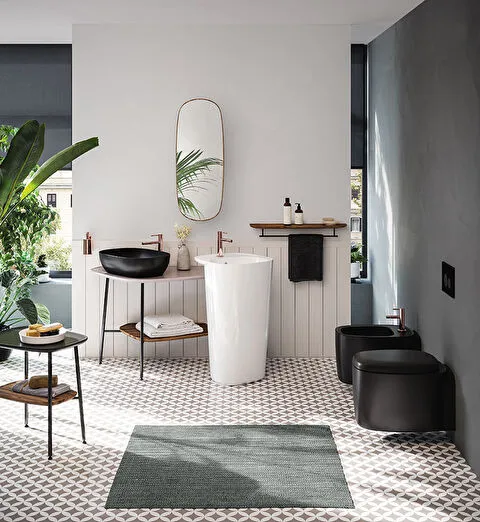
A well-designed bathroom feels calm, practical and easy to maintain. Concealed Cisterns for Wall-Hung Toilets make that possible by hiding pipework and the toilet tank inside the wall, leaving only the ceramic pan and flush plate visible. The result is a cleaner visual line and more usable floor space, which many UK homeowners now prioritise in renovations and new builds.
When you choose VitrA Concealed Cisterns for Wall-Hung Toilets, you invest in a system engineered for strength, flush control and long-term reliability. From robust steel frames to dual flush concealed cistern mechanisms designed for UK water regulations, each detail supports confident everyday use. Below, you will find clear guidance on how these systems work, which types suit your layout, and how to select the right solution for your project.
What Is A Concealed Cistern For Wall-Hung Toilet And How Does It Work?
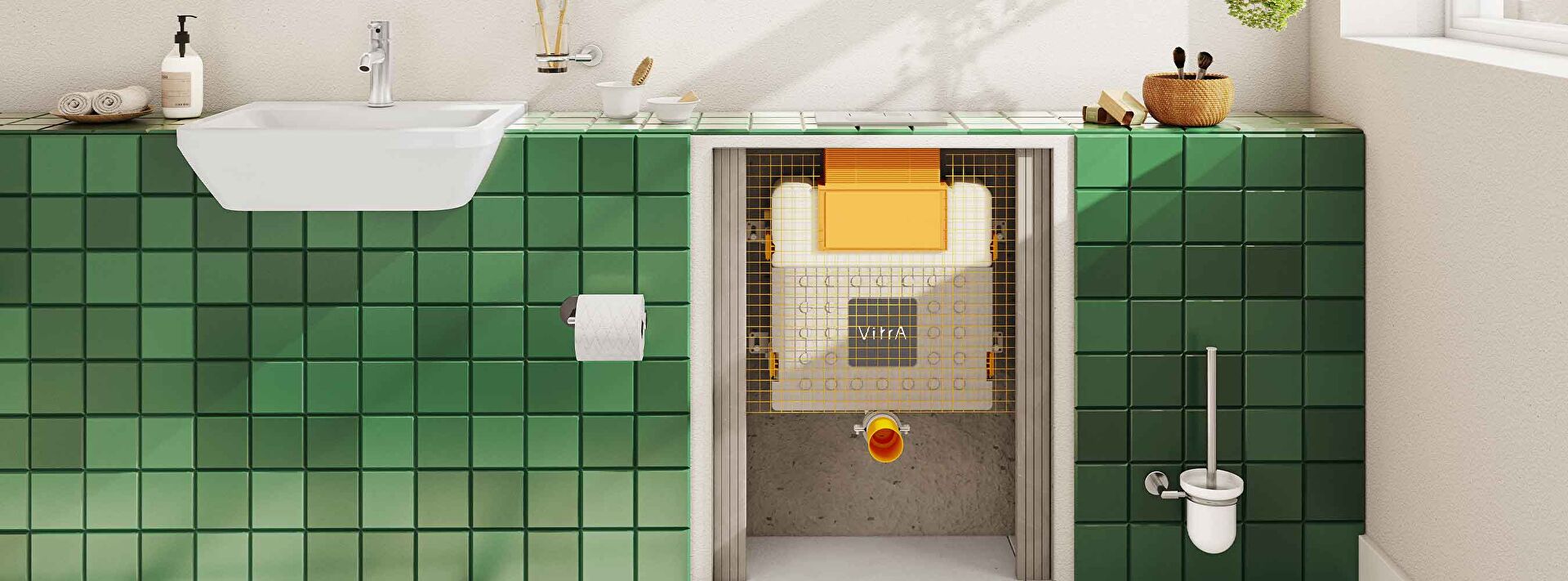
A concealed toilet cistern designed for a wall-hung WC sits within a stud wall or a purpose-built pre-wall frame. The tank, inlet valve and flush mechanism are hidden behind tiles or panels. Only the wall hung pan and flush plate remain visible. This configuration creates a floating toilet with concealed tank appearance, which many people associate with contemporary bathroom layouts across the UK.
At the core of the system is a reinforced wall hung toilet frame system. VitrA frames are typically manufactured from powder-coated steel, corrosion-resistant and load tested to support substantial weight. The load transfers through the frame to the floor and wall fixings, rather than the plasterboard alone. This addresses a common concern about strength. When installed to manufacturer guidance and UK building standards, the system performs as securely as a floor-standing model.
Key elements of VitrA Concealed Cisterns for Wall-Hung Toilets include:
- Steel support frame – Heavy duty metal construction with adjustable feet, allowing precise height setting during modern bathroom toilet installation. The frame anchors to the floor and rear wall, distributing weight safely.
- Built in toilet tank for wall hung WC – An in wall cistern UK configuration, insulated to reduce condensation and noise. Most models offer a dual flush concealed cistern mechanism, commonly 3/6 litres.
- Front service access – Maintenance access through the flush plate opening. You remove the plate to reach the fill valve and flush mechanism without removing tiles.
- Compatibility – Designed to pair with a wide range of VitrA concealed cistern and frame solutions, reducing specification errors.
The dual-flush function gives two flush volumes in line with UK regulations. A 3-litre light flush handles liquid waste, while a 6-litre full flush covers solids. Many systems allow adjustment of flush volumes during installation. Over time, this gives more control over each flush than older 9-litre single-flush toilets.
You may also wonder about servicing. With VitrA Concealed Cisterns for Wall-Hung Toilets, routine maintenance happens from the front. Installers leave adequate access behind the flush plate, so replacing a valve or adjusting the mechanism does not require wall demolition. This practical detail often reassures homeowners planning long-term renovations.
Key Benefits Of Concealed Cisterns For Wall-Hung Toilets In Modern UK Bathrooms
Bathrooms in the UK often need to work harder in limited space. A space saving toilet system transforms how a room feels and functions. By hiding the tank within the wall and lifting the pan off the floor, you create a clearer floor line. Even a compact cloakroom benefits from this approach.
Practical advantages you notice immediately include:
- More visible floor area – The floating toilet with concealed tank leaves the floor uninterrupted. In en-suites and loft conversions, this helps the room feel larger.
- Easier cleaning – An easy clean wall hung WC allows you to mop beneath the pan without awkward angles. Fewer exposed pipes also reduce dust build-up.
- Quieter operation – When installed within a cavity wall, the in wall cistern UK configuration dampens sound. This is useful in family homes or flats.
- Flexible layout planning – The wall hung toilet frame system lets you position the pan at a comfortable height, usually adjustable during installation.
Many homeowners pair VitrA Concealed Cisterns for Wall-Hung Toilets with a coordinated wall hung toilet. This creates a streamlined arrangement that works well in minimalist bathroom design UK projects. The flush plate becomes a subtle design feature rather than a bulky external tank.
In small bathroom concealed tank installations, every centimetre matters. Compact bathroom solutions such as low-height frames or shallow-depth systems allow you to build a slim boxing or stud wall. You gain storage opportunities above the concealed unit, often creating a tiled shelf for toiletries.
Hidden cistern toilet benefits also extend to hygiene. Because the pan does not touch the floor, there are fewer crevices where grime can collect. In family homes with children, this simplifies daily cleaning. Over time, the convenience becomes one of the most appreciated aspects of Concealed Cisterns for Wall-Hung Toilets.
Types Of Concealed Cisterns For Wall-Hung Toilets
Not all Concealed Cisterns for Wall-Hung Toilets are identical. The correct choice depends on wall construction, ceiling height and overall project scope. In the UK, you will generally encounter standard full-height frames and low height concealed cistern models.
The main categories include:
- Standard height frame 1120mm – Common in new builds or full refurbishments. This 1120mm wall hung toilet frame suits typical stud partitions and offers comfortable flush plate positioning.
- Low height frame 820mm – Ideal for under window toilet installation or sloped ceilings. The reduced height still supports a wall-hung pan securely.
- Mechanical flush plate system – Uses a direct rod or cable mechanism. Simple and reliable, often chosen for straightforward installations.
- Pneumatic flush plate – Operates using air pressure tubes. This offers flexible plate positioning and smooth actuation.
Flush plate selection plays a key role in usability and aesthetics. VitrA offers a range of compatible designs in finishes such as chrome, matte black and brushed tones. These coordinate with taps, shower controls and accessories for a cohesive result.
Before specifying VitrA Concealed Cisterns for Wall-Hung Toilets, consider your wall type. A solid masonry wall may require a pre-wall frame fixed in front of it, then boxed and tiled. A timber or metal stud wall allows direct integration of the frame within the cavity. In renovation projects, depth constraints often influence the choice of frame and built in toilet tank for wall hung WC.
Clear planning avoids common mistakes such as mismatched pan fixing centres or incompatible flush plates. VitrA systems are engineered for compatibility across their range, which simplifies specification for installers and homeowners.
Standard Frame Concealed Cisterns For Wall-Hung Toilets
The standard frame concealed cistern is the most widely used solution in UK homes. With an overall height around 1120mm, this heavy duty WC frame anchors securely to the structural floor and rear wall. Adjustable feet allow fine-tuning during installation, ensuring the finished pan height meets user preference and accessibility guidance.
A 1120mm wall hung toilet frame typically includes a dual flush in wall cistern pre-assembled within the frame. Water inlet connections can be positioned from the top or rear, depending on site requirements. Service access remains through the flush plate aperture, which installers leave clear behind the finished tiles.
This bathroom renovation frame system suits new stud partitions and major refurbishments. It integrates smoothly with VitrA wall-hung pans, offering tested compatibility and reliable performance. For most standard ceiling heights, the full-height frame provides comfortable flush plate positioning at eye level.
Low Height Concealed Cisterns For Wall-Hung Toilets
In properties with windows positioned low on the wall or sloping loft ceilings, a low height concealed cistern becomes essential. With a frame height around 820mm, the 820mm WC frame fits beneath window sills while maintaining structural integrity.
A compact wall hung toilet system in this format still uses a reinforced steel frame and secure fixings. The reduced height does not compromise load capacity when installed correctly. The flush plate usually sits on the vertical face of the boxing rather than above it, which influences tiling layout.
When planning an under window toilet installation, measure carefully. Check sill height, wall depth and available waste connection points. A small bathroom concealed tank solution can transform tight spaces, yet precise planning ensures the flush plate remains accessible and visually balanced within the design.
Mechanical Vs Pneumatic Flush Systems
Mechanical flush systems use a direct physical connection, such as rods or cables, between the flush plate and the cistern mechanism. They are straightforward, durable and often selected for simple layouts where the plate sits directly in front of the cistern.
Pneumatic systems operate using air pressure tubes to activate the flush valve. This allows greater flexibility in flush plate positioning, which can be helpful in bespoke bathroom designs or when installation constraints require a slight offset. Both systems are engineered for reliability, and the choice typically depends on layout, installer preference and design goals.
Choosing the right Concealed Cisterns for Wall-Hung Toilets requires attention to detail. You consider wall construction, pan compatibility, flush plate style and flush control. VitrA Concealed Cisterns for Wall-Hung Toilets bring these elements together in a coordinated system engineered for durability and straightforward servicing.
If you are planning a renovation or new build, explore the full range of VitrA Concealed Cisterns for Wall-Hung Toilets to find the frame height, flush mechanism and finish that suits your space. With reliable engineering and compatibility across VitrA wall-hung toilets and flush plates, you can specify your bathroom with clarity and confidence.
Frequently Asked Questions About Concealed Cisterns For Wall-Hung Toilets
Are Wall-Hung Toilets With Concealed Cisterns Strong Enough For Everyday Use?
Yes. When installed correctly on a tested steel frame, a wall-hung toilet is designed to support substantial weight, typically tested to several hundred kilograms. The load transfers through the frame to the floor and wall fixings. The key is proper installation on a solid surface and following manufacturer guidelines. Once fitted correctly, they are as secure as floor-standing models.
Can You Access A Concealed Cistern If Something Goes Wrong?
Access is through the flush plate opening. The plate can be removed to reach the fill valve and flush mechanism without taking tiles off the wall. Most routine maintenance, such as replacing a valve or adjusting flush volume, is done from the front. This is why correct initial installation and leaving adequate service access is essential.
How Do Concealed Cisterns Compare To Older Toilets?
Most modern systems use a dual-flush mechanism, commonly 3 and 6 litres, instead of the single 9-litre flush used by older models. Adjustable flush settings allow further fine tuning depending on household needs. Choosing a compatible pan alongside the cistern improves flushing performance in UK homes.
Is A Concealed Cistern Suitable For A Small Bathroom Or Cloakroom?
In many cases, yes. Because the tank is hidden inside the wall and the pan is wall-mounted, the floor area looks more open and is easier to clean. Low-height frames are available for under windows or tight spaces. Careful planning of wall depth and boxing is important, but these systems are often a good option for compact layouts.


